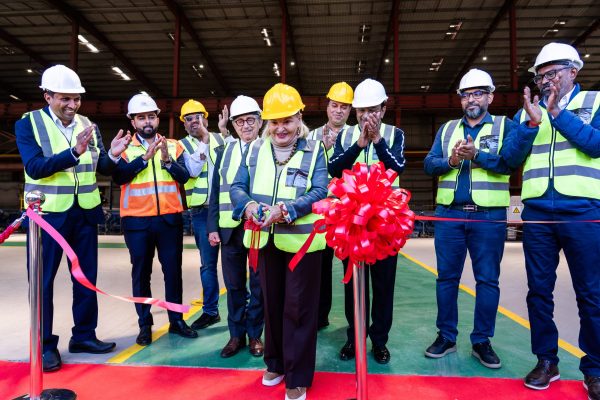


SALT producer, Cerebos, has committed R17 million to the extension of its plant at Coega Special Economic Zone (SEZ) and signed a further 10-year lease. South Africa’s leading retail salt producer was one of the first investors in Coega when it relocated to the SEZ in 2006 and invested R85 million in a new plant using innovative technology to produce high-purity, vacuum-dried salt.
Coega Development Corporation (CDC) says that the strategic investment into the adjacent Lension Facility in Zone 7 marks a key moment for the SEZ, effectively doubling Cerebos’ operational footprint. The expansion not only enhances the production of their renowned table salt but also introduces a range of purified bottled water and seasonings, reinforcing Cerebos’ commitment to innovation and quality in the region, DCD said.
Cerebos managing director, John Drinkwater, says that the strategic diversification aims to maximise the value of its seawater extraction and improve overall operating efficiencies.
Cerebos’ innovative approach ensures the maximum utilisation of resources, transforming a single process into multiple product streams.
Drinkwater explains that efficiency and vertical integration are primary objectives in the business diversification and expansion process.
“Our vision is to transform beyond being just a salt brand. Importantly, we aim to minimise wastage to the utmost extent and ensure that every drop of seawater extracted to produce our brand’s renowned table salt is utilised to the fullest.
“We extract the salt from seawater using pure vacuum dry desalination technology and are left with water, which we purify and bottle under the ‘Halo’ brand. Our automated bottling line has been established to ensure that our pricing can be kept as affordable as possible. We have also partnered with a rigid plastics manufacturer in the new facility to produce our salt flasks and Halo water bottles.
“This partnership reduces logistics costs of transporting empty packaging. Because desalination is an energy-intensive activity, we have also invested in 2.6 MW of solar generation on the land next to the plant and 4 MWh of Hubble Energy battery storage. The intention is to progress to 100% green energy,” says Drinkwater.
Cerebos’ desalination plant will also supply demineralised water to the anticipated Hive Hydrogen project earmarked for Zone 7, demonstrating yet another example of industrial synergy in the Coega SEZ.
Cerebos’ dedication to environmentally conscious practices, technological innovation and efficient production methods have garnered praise from Coega’s executive manager for business development, Asanda Xawuka.
She says, “Cerebos’ presence in the Coega SEZ has created much-needed employment in the region while simultaneously prioritising environmental stewardship and value chain efficiency through improvements in the use of technology. We look forward to supporting their successful expansion, and with it, more opportunities to reduce environmental impact and maximise social impact.”
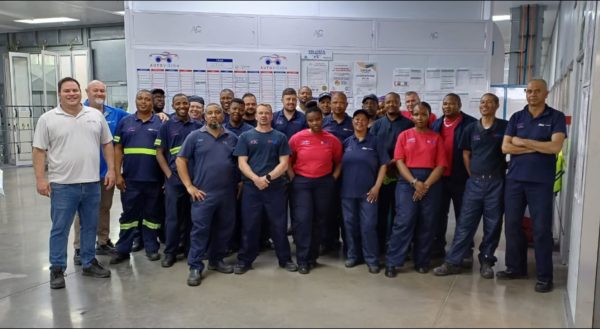
Cerebos, a key player in the Coega SEZ, currently provides employment for 200 people across its diverse operations. This contribution underscores Coega’s commitment to attracting industries that create meaningful job opportunities. Looking ahead, Coega’s strategic focus remains on expanding its investment portfolio, aiming to build upon successes like Cerebos’ to drive socio-economic development.