
CONDITION monitoring specialist company, WearCheck, uses a variety of testing techniques to enhance reliability in machinery components and prevent failures. In addition to its core service – the scientific analysis of used oil samples – the company offers Asset Reliability Care (ARC) services such as vibration analysis, thermography, balancing, operational shape deflection, motion video amplification and many condition monitoring services.
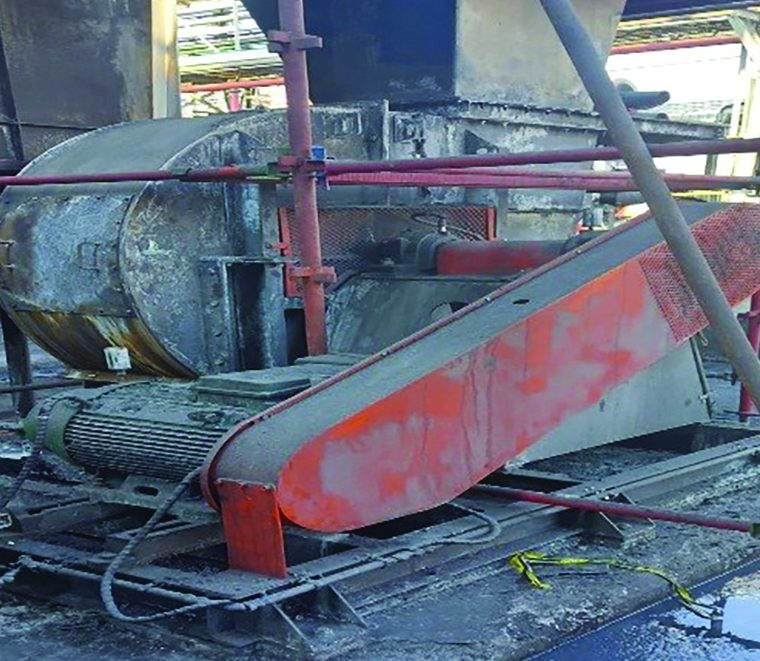
This case study highlights how a structured vibration analysis approach was used to diagnose and resolve persistent vibration on a critical boiler induced draft (ID) fan at a heavy industrial site.
WearCheck vibration analyst, Renier Kalp, discusses the case. “During routine condition monitoring, elevated vibration levels were detected on the ID fan. Initial inspection revealed severe structural looseness, with multiple base bolts either loose or missing. Vibration data supported this finding, showing a dominant 1X running-speed peak – a typical indicator of looseness due to insufficient structural rigidity.
“Structural looseness allows excessive movement in the direction of least resistance, amplifying vibration levels and placing additional stress on machine components. If left uncorrected, this can lead to secondary damage.
“After the base was repaired and all bolts secured, follow-up vibration analysis confirmed an improvement. However, the data now revealed multiple harmonics of the 1X peak, indicating the development of rotating looseness associated with bearing wear. The instability caused by the looseness had already initiated secondary damage within the fan bearings.
“The affected drive-end and non-drive-end bearings were replaced, and a pulley alignment was performed to ensure correct installation and prevent further mechanical stress. Post-maintenance measurements confirmed that the bearing-related vibration had been eliminated.
“Despite these corrections, a high 1X vibration component remained. With structural looseness, bearing defects and misalignment addressed, the remaining cause was identified as impeller unbalance through a process of elimination supported by vibration analysis.
“An in-situ balancing procedure was conducted using phase and amplitude measurements. The initial vibration level was recorded at 11 mm/s. A trial weight was applied to determine the system response, allowing accurate calculation of the required correction. A final correction weight of 104 g was installed at the calculated position on the impeller.
“Following balancing, vibration levels were reduced to 1.8 mm/s, confirming that the fan was operating within acceptable limits.”
Kalp cites this case to demonstrate the importance of addressing primary faults before attempting corrective actions such as balancing. “Multiple defects can present similar vibration signatures, particularly at 1X running speed, making accurate diagnosis essential,” he says.
By systematically identifying and eliminating each contributing factor, WearCheck’s ARC team was able to resolve the root cause of the problem and restore the fan to reliable operation.
The study highlights how detailed vibration analysis, combined with practical mechanical understanding, enables effective fault diagnosis, prevents unnecessary maintenance, and improves overall plant reliability.