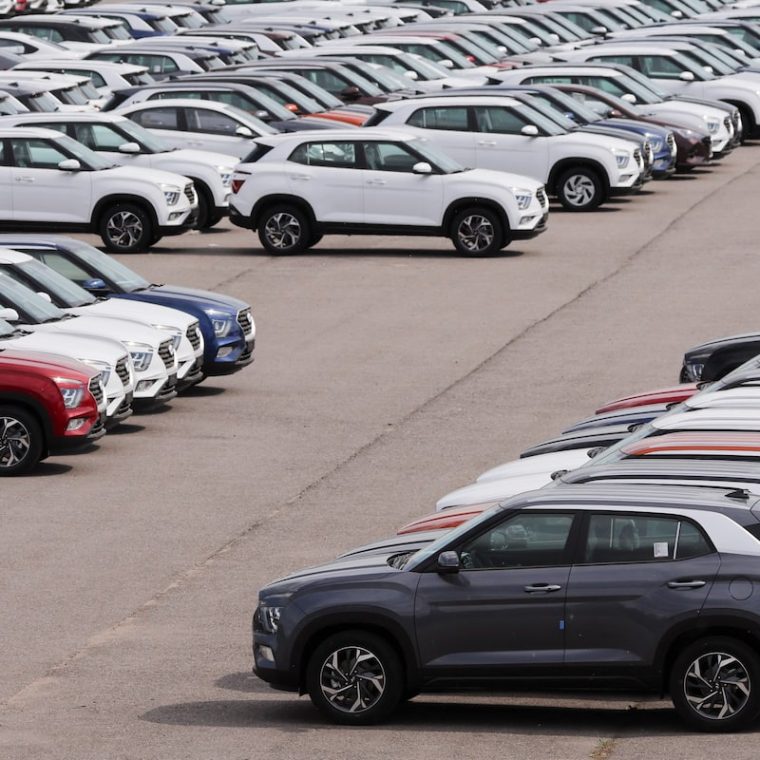

NAAMSA | The Automotive Business Council released new vehicle sales figures for September last Thursday, showing the domestic new vehicle market has continued to demonstrate notable resilience, defying expectations amid higher borrowing costs, persistent inflationary pressures, and subdued economic growth.
South Africa’s new vehicle market recorded aggregate domestic sales of 61,645 units in September 2026, representing a 12,7% increase compared to the 54,706 units sold during September 2025. Export sales amounted to 31,473 units during the month, reflecting an 18,8% decrease compared to the corresponding month last year.
Of the total reported industry sales of 61,645 vehicles, an estimated 50,171, or 81,4% represented dealer sales, 13,8% sales to the vehicle rental industry, 2,6% government purchases, and 2,2% corporate fleet sales.
The September 2026 new passenger car market registered 44,291 units, reflecting an increase of 14,7% compared to the 38,615 units sold in September 2025. The car rental industry accounted for a sound 18,4% of new passenger vehicle sales during the month.
Domestic sales of new light commercial vehicles, bakkies and minibuses amounted to 14,361 units, representing a 9,6% increase compared to the 13,099 units sold in September 2025.
Medium commercial vehicle sales reached 789 units during September 2026, a gain of 3,4% compared to the 763 units sold in September 2205 while heavy truck and bus sales totalled 2,204 units, a decrease of 25 units compared to the 2,229 units sold in September 2025.1
Commenting on this trend, naamsa CEO Dr Mncane Mthunzi said: “The South African new vehicle market closed the third quarter of 2026 on a remarkably resilient footing, with September sales increasing by 12,7% year-on-year to 61,645 units. This performance is particularly encouraging given the increasingly difficult operating environment facing consumers and businesses, including higher borrowing costs, renewed inflationary pressures and subdued economic growth.”
New Energy Vehicle sales accelerate
South Africa’s New Energy Vehicle (NEV) market continued to demonstrate robust growth and a notable acceleration in consumer adoption. During the first eight months of 2026, cumulative NEV sales reached 18,945 units, already surpassing the 16,703 units recorded during the entire 2025 calendar year by 13.4%, with four months of the year still remaining.
Traditional Hybrid Electric Vehicles (HEVs) continue to lead the NEV market, accounting for 49.6% of total NEV sales year-to-date, followed by Plug-in Hybrid Electric Vehicles (PHEVs) at 36.5% and Battery Electric Vehicles (BEVs) at 13.8%. Significantly, the composition of the market is changing rapidly. Rechargeable vehicles – PHEVs and BEVs combined – now account for just over half of all NEV sales, signalling an important shift from a market historically dominated by conventional hybrid technologies towards increasingly electrified powertrains.
Year-to-date, approximately one in every twenty new vehicles sold in South Africa is now electrified, providing further evidence of the gradual but increasingly visible evolution in consumer preferences towards alternative powertrain technologies. Particularly noteworthy has been the acceleration in rechargeable technologies: by August 2026, PHEV sales had reached 6,919 units, compared with 2,810 units during the whole of 2025, while BEV sales reached 2,622 units compared with 1,088 units for full-year 2025.
Electrification is also beginning to extend beyond the passenger vehicle market, with emerging adoption across the light and medium commercial vehicle segments. While these volumes remain relatively modest, their emergence is strategically important as South Africa’s transition broadens from private mobility into commercial applications.
The trajectory therefore points to an NEV market entering a new phase of development. Sustaining this momentum will increasingly depend on the alignment of consumer support, charging infrastructure, affordable electricity, appropriate standards, expanded model availability and, critically, the localisation of NEV and component manufacturing so that growing domestic demand translates into industrial investment, production and employment, naamsa said.
Defying macroeconomic pressures
Dr Mthunzi said: “While vehicle purchases remain sensitive to broader economic conditions, the sustained expansion in new vehicle sales demonstrates that the market is performing with notable resilience against prevailing macroeconomic pressures.
Increasing competition, greater product diversity, competitive pricing and attractive financing propositions are helping to sustain consumer demand despite continued pressure on household budgets. Encouragingly, the improvement in the PMI alongside double-digit growth in vehicle sales suggests strengthening underlying demand and provides early evidence of looming economic momentum. The automotive industry therefore continues to play an important role in supporting South Africa’s economic activity, investment, manufacturing and employment.”